Scalehub — A Registered Concept
The Proximity Gap
The structural barrier that traps superior inspection technology far from the industrial assets that need it.
The Proximity Gap
Three Barriers.
One Structural Problem.
The Proximity Gap is a term coined by Scalehub to describe the compound structural barrier that prevents commercially ready inspection robotics and drone companies from establishing local presence near industrial asset owners. It is not a failure of technology. It is a failure of proximity. Three distinct forces combine to create it.
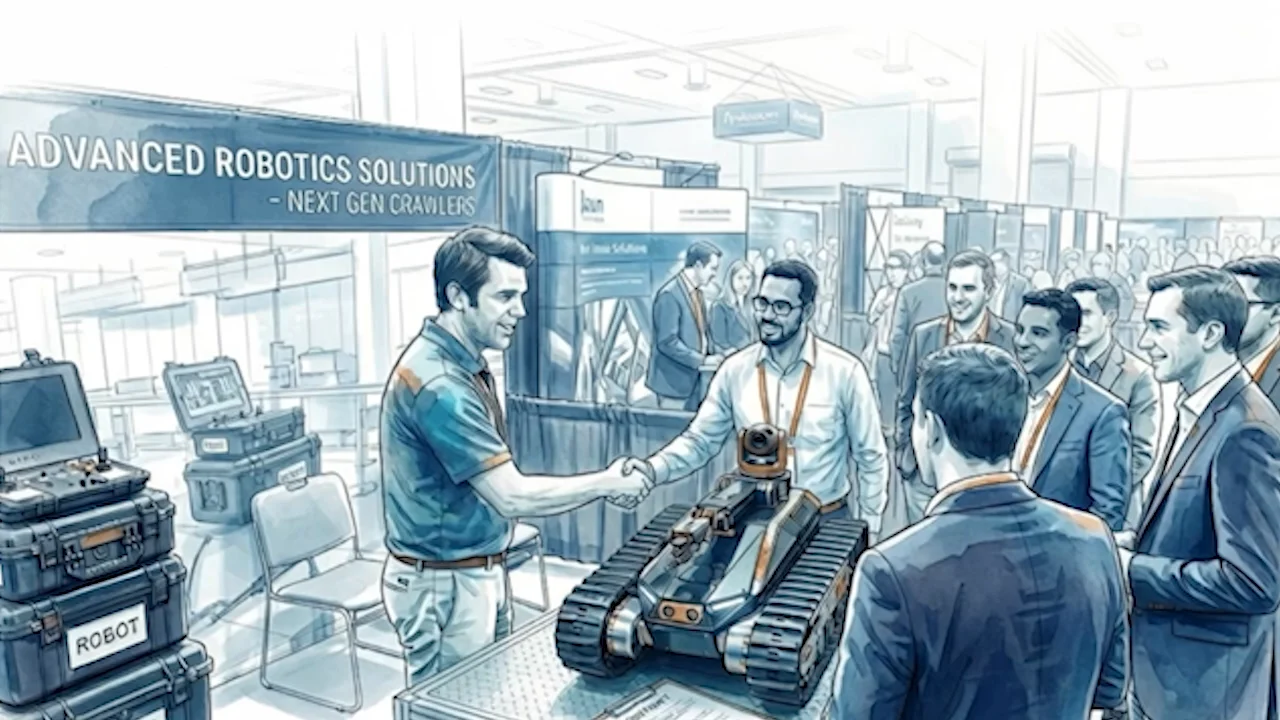
Physical Presence
You Are Not In The Room Where Decisions Happen.
- Industrial procurement runs on local relationships and face time
- Asset owners consult on-site service providers, not the internet
- A vendor without local presence is structurally invisible
- 70% of critical assets in North America and Europe exceed 25 years of age
- Inspection demand is urgent — response time is the differentiator
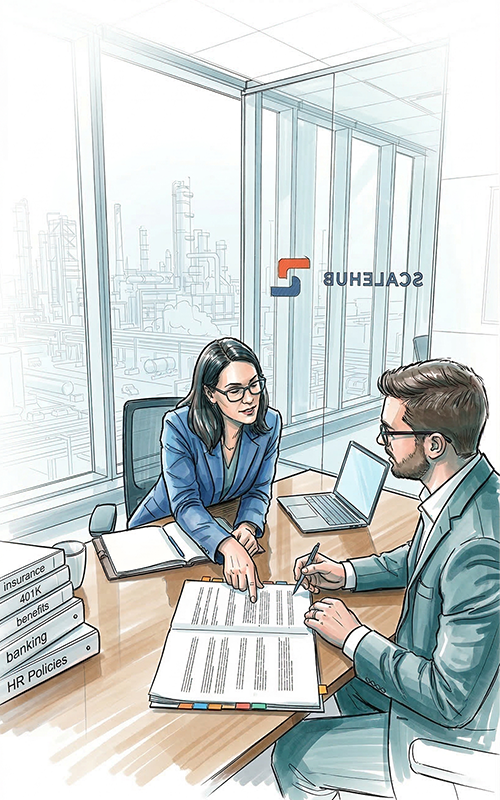
Operational Infrastructure
Building Standalone Presence Costs More Than The Market.
- A standalone US office for a Series A company costs $500K–$1M in Year 1
- Entity formation, banking, payroll, insurance take 3–6 months
- The wrong entity structure blocks banking and site access
- ATEX certification requires local infrastructure to demonstrate
- Most companies cannot justify the bet on a single new market
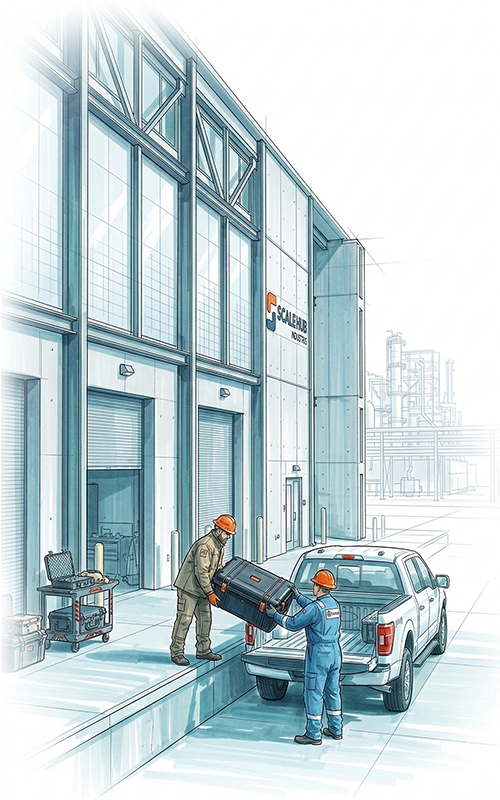
Commercial Visibility
Innovation Is Invisible Until It Is Operational.
- Hardware priced at $50K–$500K requires in-person demonstration to close
- The "Demo Dilemma": shipping units internationally for every trial
- Without local demos, pilot conversion rates stay at 3–4%
- Sales cycles stretch to 12–24 months without local touchpoints
- CAC in B2B industrial ranges $542–$723 — only if you are local
The Proximity Gap™
Six Ways the Gap Kills Commercial Momentum
The Proximity Gap is not a single event. It is a sequence of compounding failures, each one making the next harder to overcome.
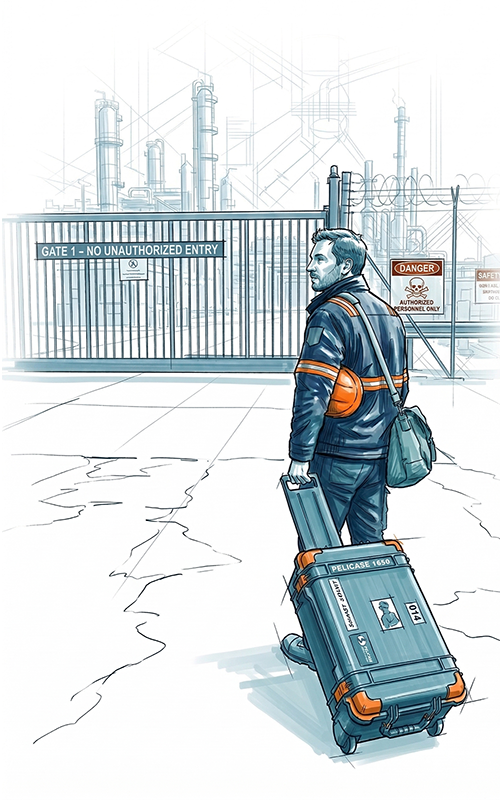
01 / THE VISIBILITY GAP
"When a New Failure Mode Emerges, Asset Owners Call Their On-Site Service Provider. Not Us."
In industrial operations, when a complex inspection challenge arises, the decision-maker consults the local team they trust, not a vendor catalogue. If your technology has not been physically seen and handled by the on-site reliability engineers and service providers who influence procurement decisions, you are excluded from the solution before the conversation begins. The Visibility Gap is not a marketing problem. It is a presence problem.
02 / THE AVAILABILITY GAP
"We Have the Technology. But We Can't Guarantee 24/7 Local Support."
Industrial clients operate in mission-critical environments where 34% of global downtime is attributed to aging assets. They cannot wait days for a spare part to ship from another continent or for a technician to fly in. If a vendor cannot provide rapid, on-site remediation, they are classified as a “niche, unproven foreign vendor,” regardless of their technological capability. The Availability Gap is the single largest reason pilot programmes fail to convert into enterprise contracts.
03 / THE DEMO DILEMMA
"Every Demo Request Means Shipping Our Equipment Internationally. We Can't Sustain That."
The sale of industrial inspection hardware priced between $50,000 and $500,000 is rarely closed without a compelling in-person demonstration in a relevant industrial environment. Without local staging infrastructure, every demo request triggers an international logistics operation: customs paperwork, ATA Carnets, equipment packaging, flights. The cost per demo attempt exceeds $10,000 before a single conversation with a procurement decision-maker. Most companies run two or three trials and stop.
04 / CAC INFLATION
"Our Sales Cycle Is 18 Months. Our Runway Is 24. The Math Doesn't Work."
The typical industrial inspection technology deal requires 3 to 5 physical touchpoints: initial meeting, facility demo, proof of concept, contract negotiation, and support alignment. Without local presence, every step involves international travel and logistics, inflating the Customer Acquisition Cost from the industry baseline of $542–$723 (local) to multiples of that figure. Sales cycles stretch to 12–24 months. Series A runway rarely survives both the cycle and the overhead.
05 / PILOT FAILURE
"Our Pilot Converted. But We Can't Support the Rollout Without Being There."
The Proximity Gap does not end when a pilot converts. Industrial asset owners require their technology suppliers to provide rapid field support, training for local operators, and compliance documentation for every deployment site. A company operating from a distant HQ cannot deliver this without local infrastructure. The result is a commercial success that cannot scale: the reference customer exists, but the rollout stalls because the vendor has no operational foothold. The gap reasserts itself at exactly the wrong moment.
06 / THE OPERATIONAL GAP
"We Know We Need to Be Local. We Just Can't Afford to Do It Alone."
The second dimension of the Proximity Gap, identified and named by Scalehub, is the operational infrastructure barrier. Physical presence is only part of the problem. Before a European robotics company can even reach the hub door, they face legal entity formation, US banking, employer-of-record requirements, insurance, payroll, and compliance obligations that consume 3–6 months of management bandwidth. The Proximity Gap™ has two dimensions. Scalehub closes both.
The Proximity Gap
Named and defined by Scalehub
Scalehub was founded to close the Proximity Gap. The term, the thesis, and the infrastructure to solve it originated with Scalehub.
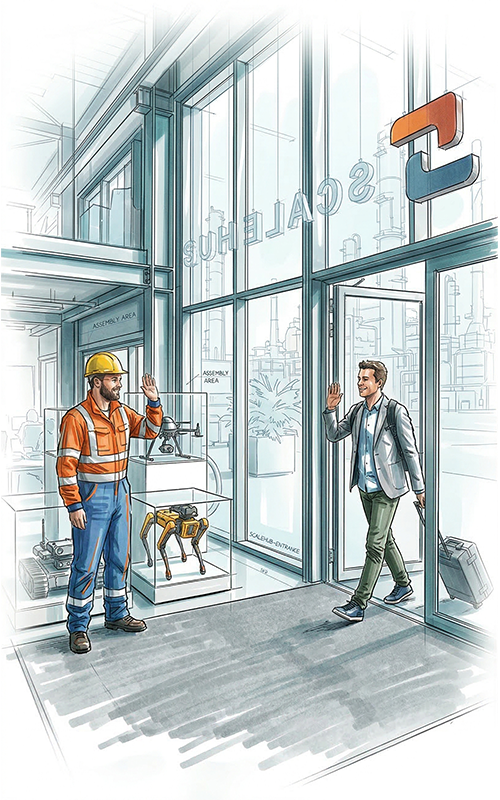
The Problem
Why Superior Technology Stalls at the Gate.
- Commercial scaling valley of death in industrial robotics
- Not a failure of technology — a failure of proximity
- Series A companies cannot justify standalone market entry bets
- Asset owners cannot evaluate what they cannot see locally
- 12–24 month sales cycles destroy runway before revenue arrives
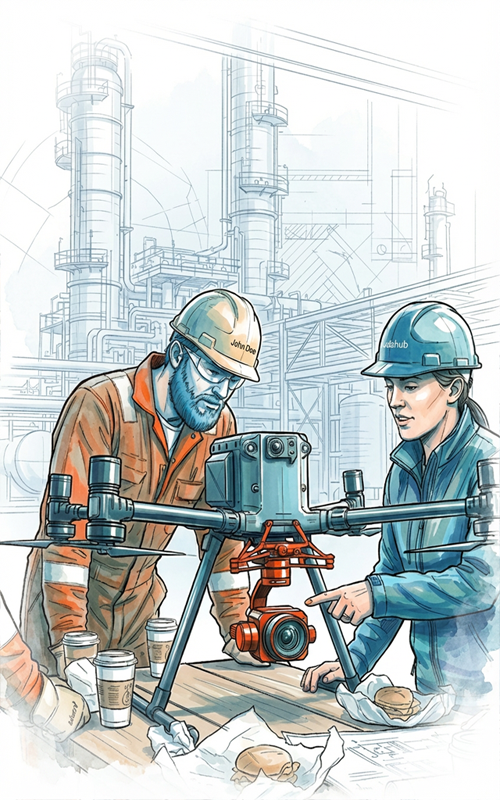
The Cost
What the Proximity Gap Costs the Industry.
- 85% of commercialization burn rate goes to market entry overhead
- $500K–$1M to build a standalone office in a single new cluster
- 34% of industrial downtime linked to aging uninspected assets
- 300+ inspection robotics companies cannot reach their customers
- Pilot conversion rate stays at 3–4% without local touchpoints
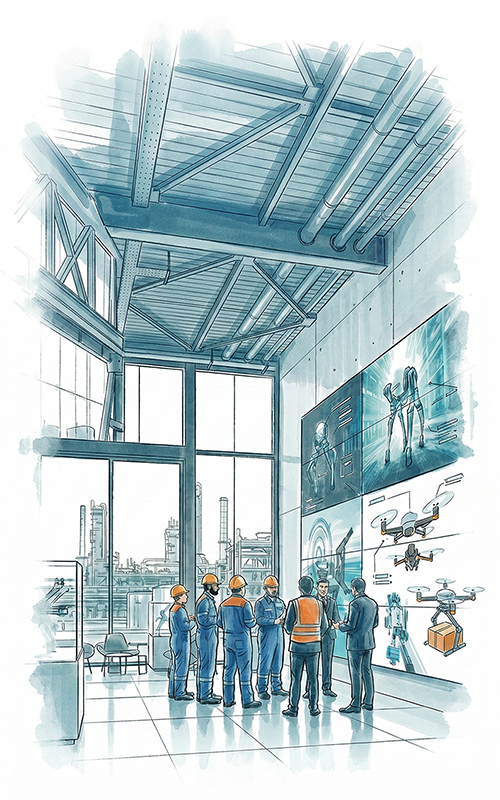
The Solution
Scalehub Closes the Proximity Gap.
- Shared industrial-grade hubs in Houston, Singen, Rotterdam, Singapore
- Physical presence, operational infrastructure, and commercial ecosystem
- ATEX-compliant demonstration environment in every hub
- LaunchPad closes the operational dimension of the gap
- Members go from foreign vendor to trusted local partner
Scalehub
Closing the Proximity Gap
The Proximity Gap™ is a Scalehub concept. The infrastructure to close it is being built in Houston, Singen, Rotterdam, and Singapore.